
What if patients with treatment-resistant depression (TRD) could be treated at home, with a ketamine tablet?
A 12-week international trial tested this possibility using a new extended-release ketamine formulation (R-107) in outpatient settings (Glue et al, 2024).
Here’s the complete breakdown of the study and how it could shape safer, more scalable treatment options for patients who don’t respond to standard antidepressants.
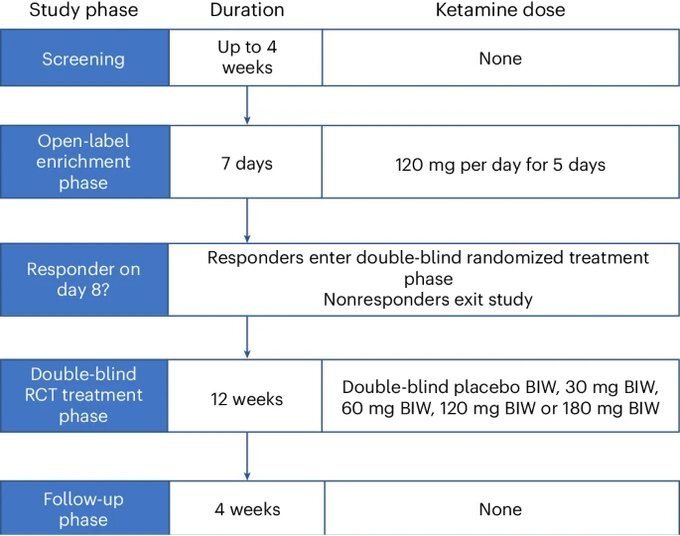
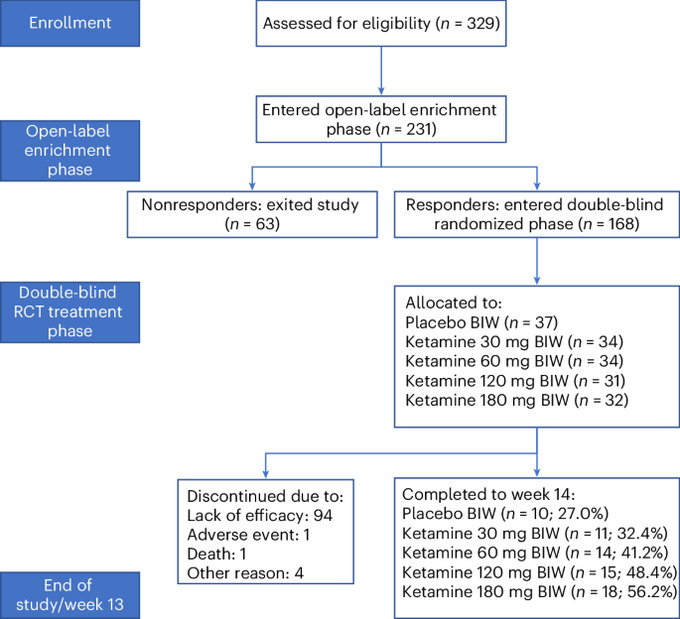
231 adults with treatment-resistant depression (TRD) entered a 5-day open-label phase.
Those who responded continued twice-weekly tablet treatment for 12 weeks, primarily at home.
The goal: test efficacy, safety, and real-world feasibility of oral ketamine.
Does the dose matter? Absolutely. Only the 180 mg dose showed statistically significant and sustained improvement in depressive symptoms. Lower doses were comparable to placebo, indicating a clear dose-response threshold.
Relapse rates over 12 weeks were lower in the 180 mg group, suggesting potential for maintenance treatment.
This adds weight to the case for ketamine as both an acute and continuation-phase option in TRD.
This was the first ketamine trial to permit home administration during the treatment phase. Adherence was high. No serious adverse events occurred. This marks a turning point in how we might deliver care for TRD. Across all dose groups:
● Adverse events were predominantly mild
● Headache, dizziness, and anxiety were the most common
● No cases of hypertension, dissociation, or sedation requiring intervention
Safety was unexpectedly strong for a glutamatergic agent. R-107 Differs from Esketamine in Formulation and Mechanism, this is not esketamine. R-107 is a racemic ketamine tablet designed to deliver gradual absorption and prolonged exposure, minimizing peaks that may cause dissociation or misuse. A pharmacokinetic shift with clinical relevance. Can this be used broadly? Not yet. Participants were enriched, only those with a rapid initial response continued in the trial. This limits generalisability. It remains unclear how unselected TRD populations would respond to this intervention.
Compared to intranasal esketamine or ECT, oral ketamine may offer:
● Greater scalability
● Less intensive monitoring
● Potential for community-based protocols
But only if larger trials replicate these findings.
If replicated, this approach could reduce:
● Clinical burden
● Logistical barriers
● Patient disengagement due to complexity Home-based options offer a new paradigm for sustained care.
What remains unknown?
● Durability beyond 12 weeks
● Long-term neurocognitive effects
● Effectiveness in broader clinical populations
This is a promising proof of concept, not yet a clinical standard.
Clinical Importance
For patients unresponsive to multiple antidepressants, options are limited.
If further validated, oral ketamine may represent a viable outpatient pathway, extending care access while reducing infrastructure demands.
Could this be the future of TRD care?
A well-tolerated, at-home intervention for a complex psychiatric condition.
This study opens the door, but the field must proceed cautiously, grounded in replication and long-term outcome data.